

A Desire for Safety is a Headache for Arms Control
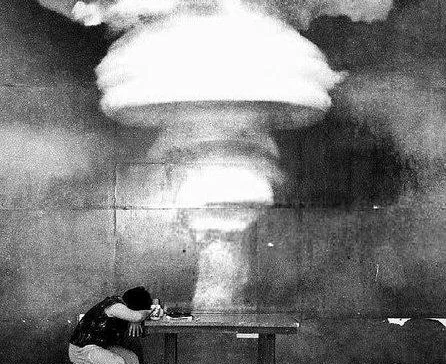
A note for folks: I am going to be cross-posting everything on this website with my Substack and vise versa. Choose whichever format you want.
The United States government has stopped beating around the bush and finally come out and directly accused China of conducting a low-yield nuclear test. This is, if true (and it looks like it’s true) of course a clear violation of the Comprehensive Nuclear Test Ban Treaty (CTBT). There have been rumblings for years about this, and during Trump 1 there were clearly some very unhappy people in both Congress and the admin who clearly thought the United States should be declassifying a lot more about China’s nuclear buildup.
Why they didn’t is something of a mystery. Perhaps the intelligence was incomplete at the time, or there was debate over the benefits of making the accusation in the first place, and USG went for diplomatic outreach instead. It is worth pondering why China did not conduct any more (detectable) nuclear tests since 2020; perhaps a lot of things happened behind the scenes we don’t know about. We will discuss this a bit later.
Precisely what the Chinese were doing with this nuclear test is unknown, but we can make some informed guesses. Judging by the yield and the claim from USG that it was a decoupled test (in which you put your explosive device basically inside a bottle within a bottle within a bottle to contain the explosion), this was not a full-scale test. It was possibly testing some sub-component or weapon primary under very specific conditions.
China’s nuclear testing presents something of a moral conundrum. Before explaining why it’s worth reviewing why China would even be conducting nuclear tests in the modern era – surely nuclear weapons are a mastered technology at this point? Well, sort of. Some interesting facts for your consideration:
- If you have the materials and the basic equipment to put them together, it is very easy to make a basic nuclear weapon. Most countries I imagine could likely succeed at slapping together a basic air-dropped gun-type nuclear weapon like Little Boy, the weapon the United States dropped on Hiroshima in 1945.
- It is difficult to make a nuclear weapon that always works when you want it to work and never works when you don’t want it to work. In the United States we call this the always/never requirement, and the United States does not deploy nuclear weapons that fail this test. This was a hard thing to master, and the history of warhead development in the United States is full of incidents in the 1950s and 1960s of weapons failing to meet this requirement. Perhaps the most famous of these incidents is the United States’ first submarine-launched ballistic missile warhead, the W47, which was judged to be not safe, and when they tried to fix it, designers accidentally rendered the entire sea leg of the triad inert.
- It is marvelously difficult to make a nuclear weapon that is always/never and is very small. Many of the methods that nuclear weapon designers use to make weapons always/never involve safety devices that ensure that material or components won’t work most of the time, and these safety mechanisms are sometimes cumbersome. This is combined with the fact that many of the methods designers use to ensure the weapon can achieve significant explosive yields involve large quantities of heavy materials that may not be used because of the weight limits on small nuclear weapons.
Because of this you want your small nuclear weapon to be as streamlined as possible, and streamlining requires you to know precisely how each and every component down to the bolts is going to work at all possible points in the deployment process of a weapon system. To know that, you need testing data, and China has a limited quantity of that. It has limited experience working with smaller designs. To compensate for this, China may feel (and has apparently felt) that it needs to conduct some small-scale nuclear tests. May of those tests are going to be tests of streamlined mechanisms to ensure the weapon works always/never, and are thus either intended or de facto safety tests.
What is entirely possible that the test USG detected and classified as a test in June of 2020 was in fact a failed safety test. That would explain the failure of the decoupling – something may have happened down in the tunnel that the weapon designers did not expect.
And here is where the conundrum kicks in. China is going to build new nuclear weapons; Xi has certainly given the order internally with his own words. So China will produce new nuclear systems. Is it in the United States’ interest for those weapon to be unsafe? Is it in the United States’ interest for China to field, in a crisis over Taiwan perhaps, a tactical or otherwise low-yield weapon that might accidentally go off at precisely the wrong time? I think the answer to that is a very obvious “no.”
So what to do about it? It’s astonishingly unlikely that the United States is going to convince China to own up to anything anytime soon. China has been ignoring US objections to its nuclear buildup for years. That is unlikely to change. On the one hand this means the United States is effectively shouting into the void at arms control and disarmament bodies staffed by individuals who view the United States as equally to blame for the current situation as Russia and China. I find it unlikely that the State Department is going to be able to sway those bodies into doing much of anything. In fact, I am increasingly pessimistic about the future of the existing arms control frameworks.
This is partly due to the unwillingness of China to play ball and Russia’s geopolitical objectives being incompatible with any semblance of stability. The people who work within the arms control organizations want none of this, and have generally taken the stance that the big three are all equally to blame for the situation that we now find ourselves in. The United States’ goal of engaging with these bodies is laudable, but unlikely to turn this particular tide. I fear the more strained the relationship between the big three and regular participants in the arms control frameworks becomes (NPT process, for example) the more appealing alternative paths like the TPNW, which already enjoys wide popular support among US treaty allies, will become. I do not think that will be a good outcome.
The other solution is to work on creating a carve out for particular kinds of safety tests. This would allow states party to the CTBT (which does not actually define what a nuclear explosion is) to conduct such safety tests while still prohibiting conducting the more offensively valuable full-scale weapon tests. We may argue that such a carve-out goes against the spirit of the “Comprehensive” Nuclear Test Ban Treaty, and they would be correct, at least in the company of Americans. Russia and China never acceded to that view, however. As long as there is some method by which all countries are communicating clearly what they are doing under the carve out, I don’t really see the harm. But this is also unlikely to happen, and not the path the US has taken so far.


 hors d'oeuvres of Battle
Leave a comment