

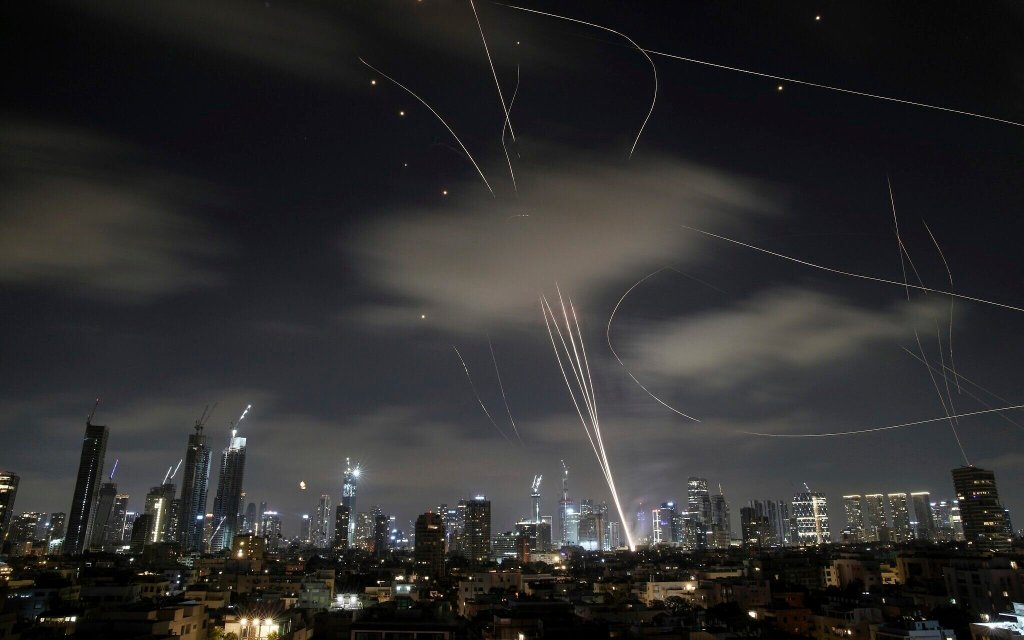
Well. That could have gone worse.
This is the first of four blog posts I have planned looking at different aspects of the 12-Day War. This first one will deal with the question on everyone’s mind: Iranian nuclear breakout. In the coming weeks, we will also cover Iran’s missile performance, some ruminations on implications for the NPT, and some thoughts on missile defenses.
I considered entitling this post “The Analytic Perils of Breakout Timetables.” Today we are bombarded (if you’ll forgive the turn of phrase) with declarations that Iran is for sure going to rush to a nuclear weapon after the bombing of Fordow, Natanz, and plenty of other facilities. These declarations are not new. For years we have heard that Iran is X number of weeks, months, or years away from the bomb, seemingly produced by considering the current rate of enrichment, whether or not the analyst has had lunch yet, and the position of the moon and the stars. These timetables are commonly used to advance arguments about Iranian nonproliferation policy, as they are now: the problem of a seemingly unknown quantity of 60% enriched uranium loose in a country that appears to be moving away from cooperation with the JCPOA signatories and towards a much less diplomatic stance.
The issue with the timetables is not that they are wrong. Many are likely quite accurate if their assumptions about Iranian courses of action and rates of enrichment are correct. Many have turned out to be wrong not because of the failure of forecasting but because of the success of diplomacy. In a sense such estimates cannot be right or wrong because they exist in a particular moment and cease to have a relationship with reality the minute they are published, subjected to the cruel Brownian motion of international politics. My issue is that they do not really mean the things the people who wield them really think they mean.
Commonly, the arguments using timetables present the timetables as effectively windows of opportunity. “[country] will have a bomb in 12 months, therefore we must bomb/diplomacy/bribe them until they stop.” Before the bombing of Fordow, breakout timetables were deployed to convince policymakers to bomb Iran. Now that Iran has been bombed, they are deployed to convince policymakers to turn to diplomacy. The implication has always been that once Iran crosses the magic “they have enough material for a bomb” threshold, then poof, all Iran’s problems disappear in a cloud of magic pixie dust and the US and Israel can never touch them again. But this is not really true. Simply having enough enriched uranium for a bomb, for instance, is a far cry from having an actual deterrence capability, or being confident in using it.
What we are truly interested here is not simply if Iran can make a nuclear device that generates sufficient fission when you push the big red button. What we are interested in is if Iran can make a weapon. This weapon must meet certain design criteria to function as intended. This is a distinct effort and a distinct problem from simply building a bomb, which may not actually confer major benefits to Iran.
If Iran’s stockpile of 60% enriched uranium is intact and recoverable (which is not known) and if Iran has a surviving stockpile of centrifuges it could hook up into a cascade (which is also not known) and if Iran could unite these two components without the US and the Israelis catching on (again, unknown) then Iran could conceivably produce a small number of bombs in a somewhat timely fashion (months). Iran would then have probably 10 or less nuclear weapons. Does that solve Iran’s security problems? No. Simply having some pits lying around almost certainly does not translate to deterrence against Israel. In order to not simply build a bomb, but a weapon, Iran must take the enriched uranium and cast in to a pit, build a weapon around it keeping in mind that Iran has strict weight limits on how much such a weapon can weigh due to the fact that it has to go on a missile (such a thing would involve designing and testing multi-point detonation, altitude sensors for proper air-bursting, and a whole host of other, unique technologies), and then put it on a missile and deploy that bomb in a manner that can credibly A) survive an Israeli first strike and B) actually get to the target. This is quite a long list! Iran has sort of demonstrated an ability to do both of those last two things – they have struck Israel and some of their force is capable of surviving an Israeli first strike. But given Iran’s on the whole lackluster performance, I think the question is still open on whether or not Iran would be truly confident with such a small number.
For example. Let’s imagine that Iran builds ten nuclear weapons – likely the maximum number of weapons they can field given the amount of uranium they have. Iran then splits those ten weapons into five companies – each with two warheads – and distributes them to missile bases across Iran to maximize individual survivability. Super. Now an Israeli attack comes and destroys four of those bases, leaving only one launch company active. Now effectively the entire Iranian deterrent rests on that single launch company, which then has to disperse and fire at their targets. Recall that Iranian missiles seem to have a pretty high failure rate, so one missile fails. Well now there is only one missile actually traveling to Israel, and the entire Israeli BMD grid, missiles stocked, is going to be ready to intercept. Even if that one missile lands and obliterates Tel Aviv, what then, precisely? The Israeli retaliation would be swift. The regime in Tehran would not be allowed to stay in power. It would be a death sentence.
You may say, well, Iran could mix nuclear weapons in with a super salvo so Israel would not know which missiles to intercept. Where was that Super Salvo two weeks ago, pray tell? The Israeli first strike destroyed Iran’s ability to coordinate such salvos, and there is no reason why Israeli would not be able to do so again soon. Iran’s deterrent would not be sufficiently survivable, and after the traumatic experience of the past two weeks, the IRGC will likely endeavor to make great strides in improving that survivability. If you are a decision-maker in Tehran right now, this must be the conversation and the dilemma you are having.
Why does this matter? Because all of this may inform us of what kind of strategy Iran will take in its future proliferation efforts. There are significant risks in the rush to the bomb strategy that seems to be accepted as the most likely course of action for Iran – risk of detection, and risk of a success that is not really a success. But it remains unclear if Iran can easily mobilize their existing R&D base and production capabilities to build not just a bomb, but a weapon. Such an effort would have extreme risks, and Iran may prefer a longer timetable.
One may argue that having a bomb but not a credible means to survive an enemy strike and deliver a weapon to its target was precisely the situation North Korea found itself in during the 2017 crisis, and it seemed to work out for North Korea. But this is a different animal – North Korea has been paranoid for decades and have an almost iron-clad security environment, and the events of the past two weeks suggest they are right to have such a thing. Despite immense doubts about the credibility of North Korea’s deterrent, doubts that may have been right or wrong, the low level of penetration in North Korea has generated a great degree of uncertainty about their actual capabilities – enough uncertainty to deter.
Iran does not have this. Yet. In the short term Israeli penetration of the Iranian security architecture will remain and its unknown if Iran will be able to root it out. We are also losing another great source of information, the IAEA, which Iran is preparing to expel from the country. This is part of why a short term rush to the bomb may backfire – Iran cannot be confident that Israeli penetration isn’t so deep as to immediately detect such activity. If Iran takes a slower path that eventually confers Iran a degree of uncertainty about its actual capabilities, its chances of deterring future Israeli action is much higher. A much longer term, slower path to the bomb may make more sense and be more achievable for Iran. I am not trying to confidently predict what Iran will do but sketch out the risks of either approach and their implications for US and Israel, and to point out that a rush to the bomb is far from certain. In fact, Iran did not immediately withdraw from the NPT as many expected, which may be our first clue that they are going to a longer timetable.
I do not mean to dispute the level of risk the Israel and the US finds itself in today. If Iran rushes to the bomb, the risks are high for not only them but for Israel and the US, because Israel could attempt to take another window of opportunity that truly isn’t there and eat a nuclear weapon. The short-term risks in the current situation are immense, and we have terribly little information about Iranian decision making or their current capabilities. But we should not be overconfident in our ability to predict Iran’s courses of action and not ignore the vast delta between making a bomb and making a weapon.
Part II of this series will look at Iran’s missile performance. Stay tuned.


 hors d'oeuvres of Battle
Leave a comment